
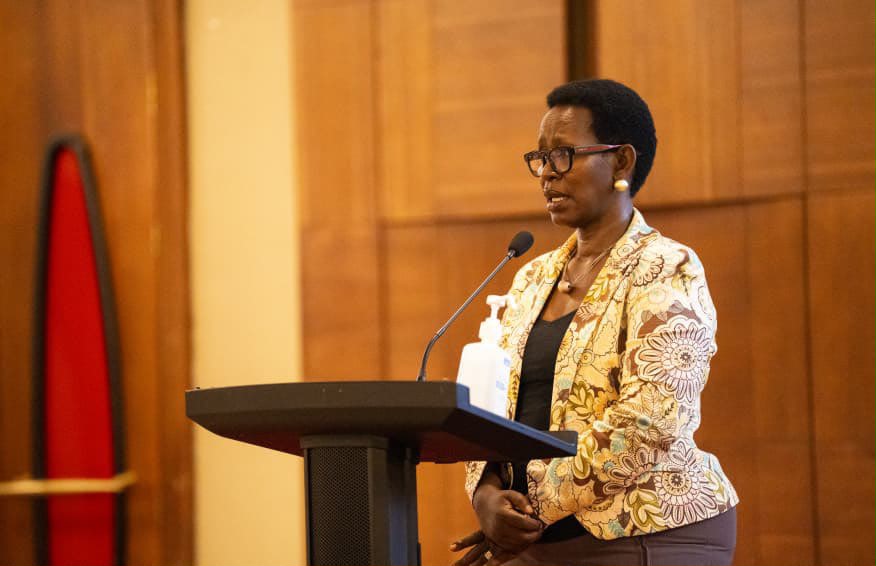
The Permanent Secretary at the Ministry of Health, Dr Diana Atwine, has warned that misinformation and false beliefs about Ebola could undermine ongoing efforts to contain the outbreak and increase the risk of community transmission.
In a statement shared on her official X account following a meeting with World Health Organization Director-General Dr Tedros Adhanom Ghebreyesus and development partners, Dr Atwine said officials reviewed the current Ebola response and discussed measures to strengthen preparedness and coordination efforts in Uganda and across the border with the Democratic Republic of Congo.
According to Dr Atwine, one of the most important strategies for ending the outbreak quickly is combating misinformation through sustained public awareness and risk communication.
She noted that false claims circulating in some communities, including beliefs that Ebola is a scam or the result of witchcraft, are reducing public perception of the risks associated with the disease and encouraging behaviours that could accelerate transmission.
Dr Atwine warned that such misconceptions not only threaten public health efforts but can also place health workers and emergency response teams at risk as they carry out surveillance, contact tracing and treatment activities.
The Permanent Secretary said the Ministry of Health's greatest concern is the possibility of widespread community transmission, which she noted could overwhelm even the strongest response systems.
She urged members of the public to take the threat seriously by adhering to preventive measures, reporting suspected cases promptly and sharing accurate information within their families and communities.
Dr Atwine emphasised that protecting others is key to protecting oneself, warning that once Ebola spreads within communities, anyone can become infected regardless of their background or location.
Her remarks come as Uganda continues to strengthen surveillance, contact tracing and public awareness campaigns while working closely with the World Health Organization and other partners to prevent further spread of the disease.
Uganda has previously contained several Ebola outbreaks through aggressive surveillance, contact tracing, public education and community engagement. Health authorities maintain that early detection and public cooperation remain critical to preventing wider transmission.
The WHO and Uganda's health authorities have repeatedly stressed that community cooperation, accurate information and early reporting of suspected cases are essential to bringing the outbreak under control.
